Flipping Physics
  • Home
  • Physics Videos
    • AP Physics 1 >
      • AP Physics 1 Review
      • AP Physics 1 Teachers
    • AP Physics 2
    • AP Physics C >
      • AP Physics C Review
      • AP Physics C Teachers
    • AP Physics C E&M
    • Vertical Videos
    • Playlists
  • URP
  • GIFs
    • Kinematics GIFs
    • Dynamics GIFs
    • Work Energy and Power GIFs
    • Momentum and Impulse GIFs
    • Rotational Kinematics GIFs
    • Rotational Dynamics GIFs
    • Universal Gravitation GIFs
    • Simple Harmonic Motion GIFs
    • Fluids GIFs
    • Waves GIFs
    • Sound GIFs
    • Electricity GIFs
  • About
    • Comments
    • Teacher Comments
    • Music
    • Flipping >
      • Gameful
      • Physics Labs
      • How to Flip
      • How to Learn
      • The Basics >
        • 8 Don'ts
        • 9 Dos
    • FAQ
    • Making a Video
    • EDpuzzle
    • Spreadsheets
    • Technology
    • Survivor Application
  • Give
  • Shop
  • Help Out
    • Quality Control
    • Collaborate
  • Blog

Understanding the Range Equation of Projectile Motion (8:53)

Previous Video
Lecture Notes
Give
AP Physics 1
Next Video
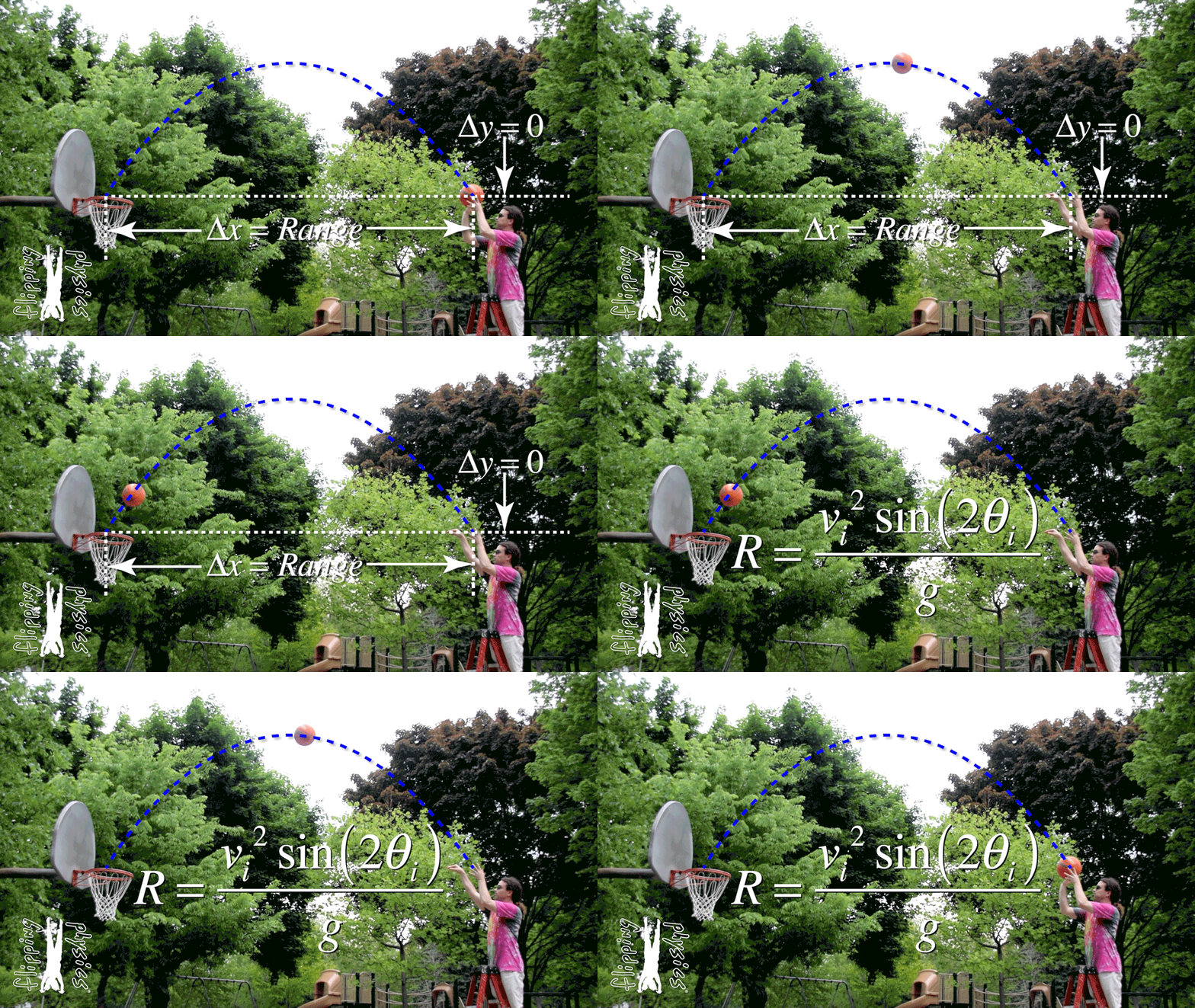
The Horizontal Range of a Projectile is defined as the horizontal displacement of a projectile when the displacement of the projectile in the y-direction is zero.  This video explains how to use the equation, why a launch angle of 45° gives the maximum range and why complementary angles give the same range.

Content Times:
0:16 Defining Range
0:50 How can the displacement in the y-direction be zero?
1:21 The variables in the equation
2:09 g is Positive!
3:05 How to get the maximum range
4:17 What dimensions to use in the equation
5:19 The shape of the sin(θ) graph
6:17 sin(2·30°) = sin(2·60°)
7:35 A graph of the Range of various Launch Angles
8:18 The Review
Picture
Picture

                Copyright © 2013-2025 · All Rights Reserved · Flipping Physics